
What Makes a Man Tasteful — And How to Carry Yourself With Nobility
The Menseventwear Style Journal

Taste isn't loud. It's the quiet confidence of a man whose clothes fit his body, his occasion, and his character. Here is exactly how a suit creates that impression, and how to build a wardrobe that does it for you every time.
Chapter One
What “Taste” Actually Means in Menswear
Ask ten men to define taste and you'll get ten answers about brands. Ask a tailor, and you'll get one answer about proportion. Refinement is not about how much you spend. It is three things working together.
Fit — the garment follows your shoulders, chest and waist without pulling or drowning you.
Appropriateness — the outfit answers the occasion instead of competing with it.
Restraint — one point of interest, not five. A velvet lapel or a bold pattern, rarely both.
A well-cut modest suit that fits will always read as more distinguished than an expensive one that doesn't. Understand that before you buy anything else.
Chapter Two
The Anatomy of a Suit

Quality lives in the shoulder line and the roll of the lapel.
The shoulder
The most important seam on the jacket. It should end exactly where your shoulder ends. If it overhangs, the whole silhouette collapses. A shoulder cannot be faked and cannot easily be altered, so judge every jacket here first.
The lapel
Notch — the versatile default. Business meetings, daytime weddings, smart dinners.
Peak — sharper and more assertive, visually broadening the chest. Ideal for formal and double-breasted cuts.
Shawl — the unbroken curve, reserved for black tie and evening celebration.
Buttons and closure
The middle button on a three-button jacket, or the top button on a two-button, should sit at or just above your natural waist. Always leave the bottom button undone. Always.
The waistcoat
A three-piece suit is the quietest upgrade in menswear. It adds a vertical line, keeps you looking finished when the jacket comes off, and photographs beautifully. Our 3-piece business & wedding suit shows that structure done simply.
Chapter Three
Fabric: The Hidden Language of Refinement

People read texture before they read colour. Matching cloth to season and setting is the fastest way to look deliberate rather than accidental.
| Fabric | Character | Best for |
|---|---|---|
| Wool | Smooth, resilient, year-round | Business, weddings, everything |
| Tweed | Textured, warm, heritage | Autumn and winter, creative offices |
| Linen | Breathable, gracefully creased | Summer and destination weddings |
| Velvet | Deep, light-catching, luxurious | Evening events, galas, festive parties |
| Corduroy | Soft ribbed texture, characterful | Cool weather, smart-casual occasions |
Shop the fabrics
Colder months — Classic Tweed 3-Piece
Warm months — Linen Peak Lapel Suit
Evening occasions — Velvet Peak Lapel Suit
Chapter Four
Colour: A Wardrobe That Compounds
Once the foundation is there, patterns earn their place: a subtle tweed check, a windowpane plaid, a fine stripe. If the suit speaks, let the shirt and tie listen.
Chapter Five
Dress Codes, Decoded

Black tie — a shawl lapel tuxedo, white dress shirt, black bow tie, polished oxfords.
Formal & cocktail — a dark two or three-piece suit, crisp shirt, silk tie, leather oxfords.
Daytime wedding guest — mid-grey, blue or soft earth tones. Never outshine the groom, never wear white.
Business professional — navy or charcoal, conservative pattern, minimal accessories.
Smart casual — an unmatched blazer in corduroy or tweed, no tie required, loafers welcome.
Chapter Six
The Final 10% That Reads as 50%

- ◆ Belt and shoes should match in leather tone. Non-negotiable and instantly visible.
- ◆ Pocket square should complement the tie, never match it exactly.
- ◆ Tie width should roughly mirror your lapel width.
- ◆ A watch that is slim and understated beats oversized and shouting.
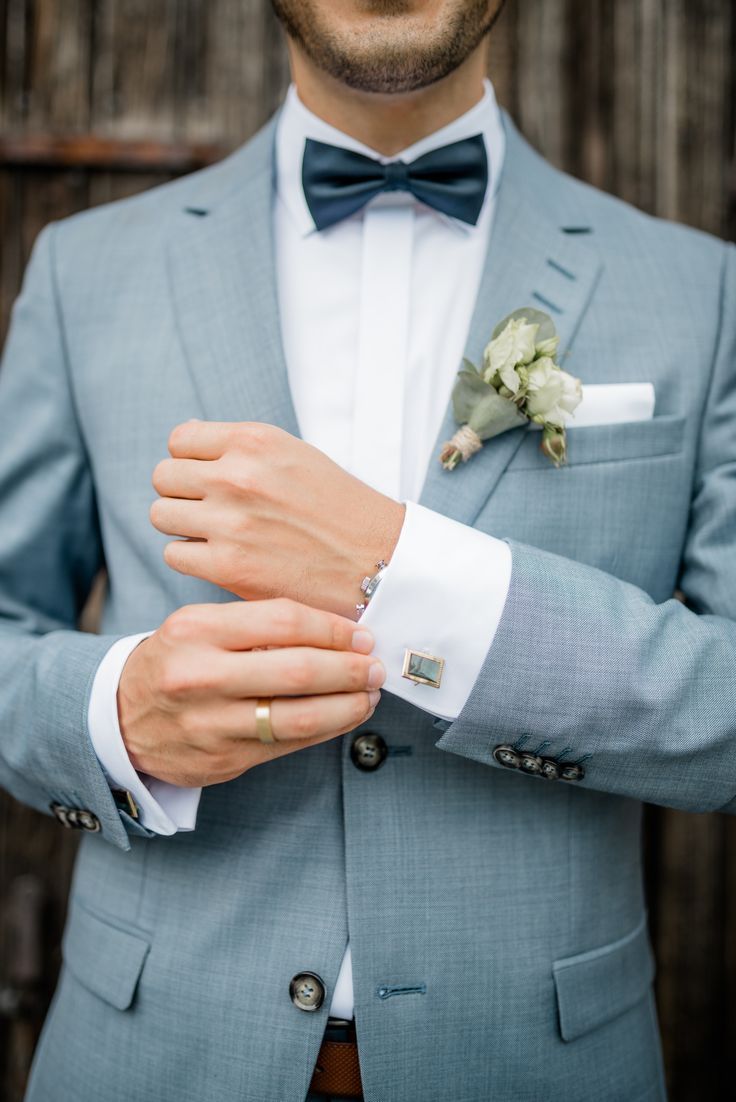
- ◆ Shirt cuff should show 1–1.5 cm beyond the jacket sleeve. That sliver of white is the classic mark of a man who knows.
Chapter Seven
Presence: Wearing the Suit, Not Being Worn By It

The finest cloth in the world cannot rescue slumped shoulders. Nobility of bearing is mostly posture, grooming and ease. Stand tall, keep the jacket pressed, steam out creases before you leave, polish your shoes, and then forget what you are wearing.
A tasteful man is one whose clothing quietly supports him, so that people remember him, not his outfit.
Chapter Eight
Care: Making Elegance Last
Rest a suit 24 hours between wears so the fibres recover.
Use a broad wooden hanger, never wire.
Brush after each wear; dry clean only two to four times a year.
Steam rather than iron, and store in a breathable garment bag.
Good to know
Frequently Asked Questions
How should a men's suit fit properly?
The shoulder seam should end where your shoulder ends, the jacket should close without pulling at the button, and you should see about 1–1.5 cm of shirt cuff. Trousers should have a slight break at the shoe. Shoulders and jacket length are hardest to alter, so prioritise those; sleeves, waist and hem are easy fixes for a tailor.
What colour suit should I buy first?
Navy. It flatters nearly every skin tone, works for business, weddings, interviews and dinners, and pairs with almost any shirt or tie. Charcoal grey is the natural second suit, and black is best kept for black tie and formal evening occasions.
Is a 2-piece or 3-piece suit better?
A 2-piece is more versatile for everyday business and warm weather. A 3-piece adds a waistcoat that creates a longer, more formal line and keeps you polished when the jacket comes off, which makes it a favourite for weddings, grooms and photographed events.
Which suit fabric works best for a summer wedding?
Linen or a lightweight wool blend. Linen breathes exceptionally well and creases in a way that reads relaxed rather than sloppy, which suits beach and destination weddings. For winter events, choose tweed, corduroy or velvet for warmth and depth.
Notch, peak or shawl lapel: what's the difference?
Notch lapels are the versatile everyday choice for business and daytime events. Peak lapels point upward, broaden the chest and read more formal and assertive. Shawl lapels have a smooth continuous curve and belong to tuxedos and evening wear.
Menseventwear
Find Your Suit
Taste begins with the right foundation. Explore cuts, fabrics and lapels made for the occasion — and for the man wearing them.
Shop the collection


