
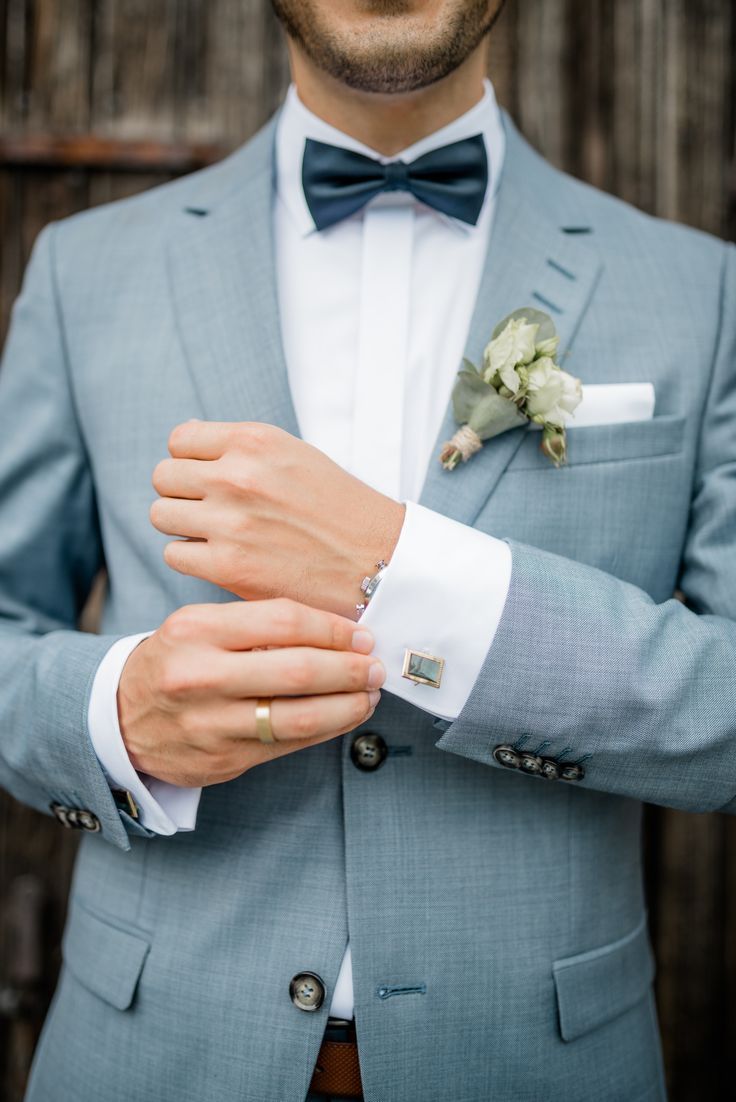
The Rules of Suit Button Etiquette Every Man Should Know
The Gentleman's Guide
The Rules of Suit Button Etiquette
Every Man Should Know
One detail separates a well-dressed man from a truly polished one. It is not the fabric, the lapel, or the colour — it is knowing exactly which buttons to fasten, and when.
Foundation
Why Suit Button Rules Matter
Suit button etiquette is not arbitrary. The rules evolved over more than a century of tailoring tradition — shaped by practicality, silhouette, and the demands of formal dress. When you button your jacket correctly, the suit drapes as the tailor intended: the chest opens naturally, the waist suppression is visible, and the overall silhouette is clean and structured.
Beyond aesthetics, these rules are a form of social fluency. At a wedding, a boardroom, or a black-tie event, knowing the conventions shows respect for the occasion — and for yourself.
 Precision in every detail — including how you button your jacket — defines a truly well-dressed man.
The Universal Rule
Always unbutton your jacket when you sit down.
Re-button it the moment you stand.
Sitting with a buttoned single-breasted jacket pulls the fabric, strains the button, and creates unsightly creases. Make it a reflex — every time, without exception.
01 — Two-Button Jacket
The Modern Standard
The two-button suit is the most common configuration in contemporary menswear. Its rule is simple and memorable:
Top button — Always fastened when standing.
Bottom button — Never fastened. Ever.
The bottom button is purely decorative. Fastening it shortens the jacket's visual line, bunches the fabric at the hips, and disrupts the clean V-shape of the lapels. This rule applies whether you are wearing a Notch Lapel business suit, a Peak Lapel wedding jacket, or a slim-cut evening suit.
 A two-button suit with only the top button fastened — the correct, polished approach.
02 — Three-Button Jacket
The Classic Rule
Three-button suits were the dominant style through much of the 20th century and remain a distinguished choice for formal and business occasions.
Top Button
Sometimes
Optional — fasten for a more formal look
Middle Button
Always
The anchor — must always be fastened
Bottom Button
Never
Decorative only — always left open
A common variation is the three-roll-two configuration, where the lapel rolls down to cover the top button naturally. In this case, only the middle button is fastened — the top button is hidden by the roll of the lapel and should never be forced closed.
 On a three-button jacket, the middle button is always fastened — the anchor of the silhouette.
03 — One-Button Jacket
Formal Simplicity
The single-button jacket is most commonly found on tuxedos, dinner jackets, and formal evening wear. Its rule is the simplest of all: the single button is always fastened when standing.
Single-button jackets are designed to create a long, elegant lapel line — often a Shawl Lapel or a wide Peak Lapel — that draws the eye upward. The single button sits at the natural waist, cinching the silhouette and framing the shirt and tie beneath. It is the quintessential wedding suit configuration for grooms who want a sleek, modern formal look.
 A single-button Peak Lapel wedding suit — elegant, structured, and effortlessly formal.
04 — Double-Breasted Jacket
The Exception to Every Rule
Double-breasted jackets operate by entirely different principles. Unlike single-breasted jackets, a double-breasted suit should remain fully buttoned at all times when standing — and in most cases, even when seated.
The overlapping front panels are designed to be worn closed. Leaving them open creates a sloppy, unstructured appearance that undermines the jacket's inherently bold, authoritative silhouette. The most common configurations are 6×2 and 4×2 — always fasten the functional buttons, and always secure the anchor button on the inside to keep the overlap flat.
The double-breasted suit is a power statement. Wear it fully buttoned and wear it with confidence.
 A double-breasted suit commands presence — always worn fully buttoned for maximum impact.
At a Glance
Suit Button Rules: Quick Reference
| Jacket Style | Top | Middle | Bottom |
|---|---|---|---|
| Two-Button | ✓ Always | — | ✗ Never |
| Three-Button | ~ Sometimes | ✓ Always | ✗ Never |
| One-Button / Tuxedo | ✓ Always | — | — |
| Double-Breasted | ✓ All functional buttons — always fully closed | ||
Occasion Guide
Button Rules for Every Occasion
Wedding Suits
For grooms and groomsmen, the button rule is the same — but the stakes are higher because every moment is photographed. A single-button or two-button Peak Lapel or Shawl Lapel jacket is the most popular choice. Keep the button fastened during the ceremony and formal portraits. During the reception, once formality relaxes, the rules relax with it.
Black Tie & Tuxedos
Tuxedo jackets follow the same rules as their suit counterparts. The key difference: at black-tie events, the jacket should remain on and buttoned for the duration of the formal proceedings. Removing the jacket at a black-tie dinner is generally considered a breach of dress code unless the host signals otherwise.
Business & Smart Casual
In a business context, the standard two-button or three-button rules apply. For smart casual occasions where a suit jacket is worn without a tie, the same buttoning rules hold — though you may choose to leave the jacket open entirely for a more relaxed register. If you button it, button it correctly.
Avoid These
5 Common Buttoning Mistakes
Mistake 01
Fastening the bottom button
The most common error. It shortens the jacket's line and strains the fabric at the hips.
Mistake 02
Leaving all buttons open while standing
An unbuttoned jacket while standing looks unfinished and careless — always button up when on your feet.
Mistake 03
Keeping a single-breasted jacket buttoned while seated
This pulls the jacket across the chest, creates creases, and looks visibly uncomfortable.
Mistake 04
Leaving a double-breasted jacket open
The overlapping panels are designed to be closed. Open, they look sloppy and undermine the jacket's authority.
Mistake 05
Forcing the top button on a three-roll-two jacket
If the lapel naturally rolls over the top button, it is not meant to be fastened — forcing it distorts the lapel roll.
FAQ
Frequently Asked Questions
Mastering suit button etiquette is one of the simplest ways to elevate your appearance. These rules take seconds to learn and a lifetime to appreciate.
Dress with intention. Button with purpose. Let the suit do the rest.


