
The Complete Men's Suit Fit Guide: Find Your Perfect Cut
Choosing the right suit fit is one of the most important decisions a man can make when dressing for any occasion — from a boardroom meeting to a black-tie wedding. The wrong fit can undermine even the most expensive fabric, while the right fit transforms an off-the-rack suit into something that looks bespoke. This guide breaks down everything you need to know to find the cut that flatters your body, suits your lifestyle, and ensures you look impeccably dressed every time.
1. Slim Fit vs Regular Fit
The debate between slim fit and regular fit is the starting point for every suit purchase. Understanding the difference goes far beyond aesthetics — it's about how a suit works with your body, your lifestyle, and the occasions you dress for.

Body Type: Who Wears What Best
Slim Fit is engineered for men with a lean, athletic, or naturally narrow build. The jacket is cut close to the torso with a pronounced waist suppression, and the trousers taper significantly from the thigh to the ankle. If you have broad shoulders and a narrow waist, a slim fit will celebrate that V-shape silhouette beautifully.
 Slim Fit |
 Regular Fit |
Regular Fit (also called Classic Fit) offers a more generous cut through the chest, waist, and hips. It suits men with a broader or fuller build, or those who simply prefer more room to move. The trousers have a straight leg from hip to hem, providing comfort without sacrificing formality.
“A slim fit suit on the wrong body type doesn’t look slim — it looks strained. Always prioritize fit over trend.”
Comfort & Mobility
Slim fit suits, by design, restrict movement more than regular fit. If you're sitting through long meetings, attending a full-day wedding, or need to move freely, a regular fit will serve you better. Slim fit excels in shorter-wear scenarios — cocktail parties, evening events, or photo opportunities where you'll be standing and looking sharp.
| Feature | Slim Fit | Regular Fit |
|---|---|---|
| Best For | Lean / Athletic builds | Broader / Fuller builds |
| Comfort | Moderate | High |
| Formality | Modern / Fashion-forward | Classic / Traditional |
| Silhouette | Close to body, tapered | Relaxed, straight |
| Trouser Leg | Tapered | Straight |
Formality Level
Both fits are appropriate for formal occasions, but they project different energies. Slim fit reads as contemporary and fashion-conscious — ideal for younger professionals, creative industries, and modern weddings. Regular fit carries a timeless authority that suits senior executives, traditional ceremonies, and conservative dress codes.
2. Modern Fit Suit Guide
If slim fit feels too tight and regular fit feels too boxy, the Modern Fit is your answer. It has become the dominant silhouette across European and American menswear — and for good reason.

The European & American Mainstream Silhouette
Modern Fit sits precisely between slim and regular. The jacket has a clean, structured shoulder, a subtle waist suppression that creates shape without constriction, and a chest that allows for comfortable breathing and layering. The trousers have a mid-rise waist and a gentle taper — not as dramatic as slim fit, but far more refined than a straight leg.
In Italy, this is simply called the “contemporary” cut. In the UK, it’s often marketed as “tailored fit.” In the US, major brands like Hugo Boss, Calvin Klein, and Ralph Lauren have made this their flagship silhouette. The language differs, but the principle is the same: a suit that looks sharp without sacrificing wearability.
“Modern Fit is the great equalizer — it flatters the widest range of body types while keeping you firmly in the realm of the well-dressed.”
More Comfortable Than Slim — Without Sacrificing Style
The key advantage of Modern Fit is that it gives you room where you need it most: across the shoulders, through the upper chest, and in the seat of the trousers. You can sit, stand, shake hands, and dance at a wedding reception without feeling restricted. Yet the overall silhouette remains clean, structured, and unmistakably elegant.
Who Should Choose Modern Fit?
- Men with an average or slightly athletic build who find slim fit too restrictive
- Men who wear suits regularly and need all-day comfort
- Those attending weddings, galas, or formal events where they'll be active
- Men transitioning from casual to formal dressing who want a forgiving, flattering cut
- Anyone who wants one suit that works across multiple occasions
3. How Should a Suit Fit?
Regardless of which cut you choose, the fundamentals of proper suit fit remain the same. These are the checkpoints every well-dressed man should know — and the details our team uses to ensure every suit we offer meets the highest standard of tailoring.
The Shoulders: The Most Critical Point

The shoulder seam is the single most important fit point on a suit jacket — and the hardest to alter. The seam where the sleeve meets the jacket body should sit precisely at the edge of your shoulder bone, with no overhang and no pulling inward. When you look in the mirror, the shoulder line should appear clean, flat, and natural.
- Divots or dimples at the top of the sleeve — the jacket is too narrow in the shoulder
- Overhang beyond the shoulder bone — the jacket is too wide; very difficult to alter
- Bunching or pulling across the upper back — incorrect shoulder width or back length
“You can alter a chest, a waist, a hem — but you cannot move a shoulder seam without rebuilding the jacket. Always get the shoulders right first.”
Sleeve Length: The Shirt Cuff Rule

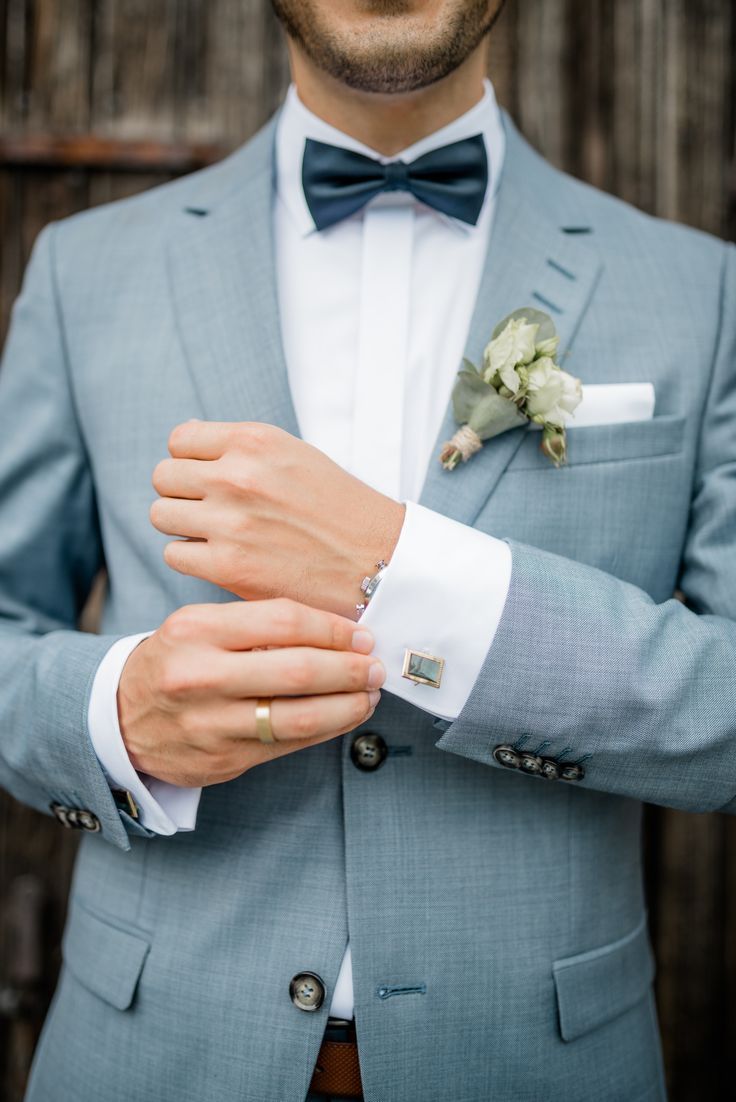
The jacket sleeve should end so that approximately 1–2 cm of your dress shirt cuff is visible. This signals attention to detail and proper fit. If your jacket sleeve covers your shirt cuff entirely, the sleeve is too long. If more than 2 cm of shirt is showing, the sleeve is too short. Both are easy alterations any tailor can perform in under an hour.
Trouser Length & The Break

| Break Type | Description | Best For |
|---|---|---|
| No Break | Hem sits just above the shoe; ankle may be visible | Modern, fashion-forward looks; slim fit trousers |
| Slight Break | A small, clean fold at the front of the shoe | The most versatile and universally flattering option |
| Full Break | A pronounced fold covering most of the shoe laces | Traditional, classic, or conservative dress codes |
Chest Fit: The Button Test
When you button the jacket, it should close smoothly without pulling or creating an “X” shape across the button. You should be able to slip one flat hand inside the jacket — if you can fit a fist, it’s too loose; if you can’t fit your hand at all, it’s too tight. The lapels should lie flat against your chest with no gaping at the collar.
4. Double Breasted vs Single Breasted Suit

A Brief History of the Double Breasted Suit
The double breasted suit evolved from the naval reefer jacket of the 19th century — a practical, wind-resistant garment worn by British sailors. By the 1930s, it had been adopted by Hollywood icons and European royalty, becoming a symbol of power and sophistication. The Duke of Windsor, Cary Grant, and later the power-dressing executives of the 1980s all championed the double breasted silhouette. Today, modern iterations are slimmer, less padded, and far more wearable than their predecessors.

Who Should Wear a Double Breasted Suit?
- Taller men — the vertical button alignment elongates the torso beautifully
- Slim to average builds — the extra fabric across the chest adds visual weight and presence
- Men who want to make a statement — a double breasted suit commands attention in any room
| Feature | Double Breasted | Single Breasted |
|---|---|---|
| Formality | Very High | High to Moderate |
| Versatility | Occasion-specific | Highly versatile |
| Lapel Style | Peak lapels (standard) | Notch or peak lapels |
| Best Body Type | Tall, slim to average | All body types |
| Statement Level | Bold, commanding | Classic, understated |
How to Style a Double Breasted Suit
- Always keep it buttoned — a double breasted suit should remain buttoned when standing. An unbuttoned double breasted jacket looks unfinished.
- Pair with a tie — the formality calls for a tie. A pocket square in a complementary colour adds the finishing touch.
- Choose slim trousers — the volume of the jacket is balanced by a cleaner, tapered trouser leg.
- Opt for Oxford or Derby shoes — cap-toe Oxfords in black or dark brown are the ideal pairing.
- Keep accessories minimal — a simple watch, a clean pocket square, and a well-chosen tie are all you need.
Find Your Perfect Suit
Understanding suit fit is the foundation of dressing well. Every suit in our collection is designed with these fit principles at its core — whether you're drawn to the sharp precision of a slim fit, the universal appeal of a modern fit, or the commanding presence of a double breasted silhouette. If you're unsure which fit is right for you, our team is available to guide you through the selection process.


