How to Match Belts and Shoes with Suits: Golden Rules, Matching Matrix, and Essential Exceptions
How to Match Belts and Shoes with Suits: Golden Rules, Matching Matrix, and Essential Exceptions
In classical menswear, true elegance rarely shouts; it whispers through deliberate harmony. You can wear a thousands-of-dollars bespoke wool suit, but if your belt is glossy black and your shoes are weathered cognac brown, the jarring visual disconnect instantly fractures your entire silhouette.
Matching your belt and shoes is the ultimate litmus test of a polished gentleman. In this comprehensive guide, we unpack the 3 foundational matching rules, provide an exhaustive Shoe & Belt Matching Matrix across all major suit colors, and explore the crucial sartorial exceptions—including why a three-piece suit should never be worn with a belt.
 The harmony principle: Coordinating leather tones, textures, and buckle hardware creates effortless sartorial unity
The 3 Ironclad Rules of Matching Belts & Shoes
To keep your outfit looking intentional and cohesive, master these three foundational pillars of leather coordination:
Match the Color Family
Black leather pairs exclusively with black leather. Brown leathers must belong to the same warmth family: pair dark chocolate with espresso, cognac with warm caramel, and oxblood with burgundy. They do not need to be laser-identical, but their tonal warmth must align.
Match the Texture & Sheen
Texture communicates formality. High-gloss polished calfskin shoes demand a smooth, semi-gloss dress belt. Matte leather pairs with matte leather. Suede shoes (such as Chelsea boots or loafers) should always be anchored by a textured suede belt.
Coordinate Metal Hardware
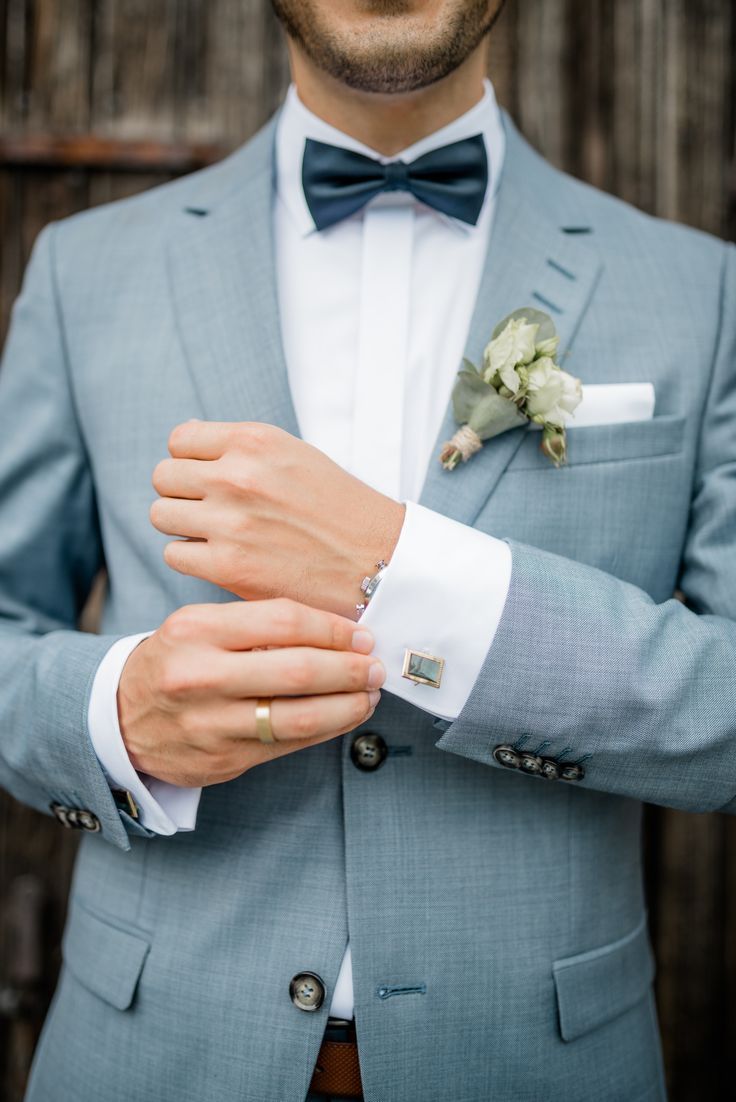
Your belt buckle is jewelry. Silver or chrome buckles harmonize with stainless steel watches, white gold cufflinks, and tie clips. Brass or gold-toned buckles pair with yellow gold timepieces, brass collar bars, and vintage rings. Wedding bands remain the sole exception.
 Formal Standard: Black calfskin Oxfords paired strictly with a sleek 1.25" black dress belt
 Daytime Sophistication: Burnished cognac wingtip brogues aligned with a tonal cognac leather belt
The Suit, Shoe & Belt Matching Matrix
Use this quick-reference sartorial matrix to instantly identify the optimal shoe color and corresponding belt for every major suit shade:
| Suit Color | Recommended Shoe Color | Corresponding Belt | Formality & Vibe |
|---|---|---|---|
| Navy Blue | Dark Chocolate Brown Oxfords | Dark Brown Calfskin Belt | Business Formal / Weddings |
| Navy Blue | Cognac / Tan Wingtip Brogues | Cognac Burnished Leather Belt | Smart Casual / Receptions |
| Charcoal Grey | Polished Black Cap-Toe Oxfords | Sleek Black Boxcalf Dress Belt | Executive / Solemn Events |
| Mid Grey / Slate | Deep Burgundy / Oxblood Monk Straps | Matching Oxblood Leather Belt | Sartorial Cocktail / Galas |
| Brown & Tweed | Espresso Suede Chelsea Boots | Dark Brown Textured Suede Belt | Rustic Weddings / Autumn |
| Olive Green | Dark Walnut Derby Shoes | Walnut Feathered-Edge Belt | Modern Gentleman / Creative |
| Tan / Beige Linen | Sand Suede Penny Loafers | Braided Tan or Woven Suede Belt | Summer Resort / Garden |
| Black Tuxedo | Patent Leather Court Pumps / Oxfords | NO BELT (Cummerbund / Braces) | Strict Black-Tie / Formal Gala |
 Tactile synergy: Suede boots paired with a matching suede belt elevate rustic tweed and herringbone suits
The Critical Exceptions: When to Ditch the Belt Completely
Knowing how to match your belt is vital, but knowing when not to wear a belt at all is the hallmark of advanced tailoring mastery:
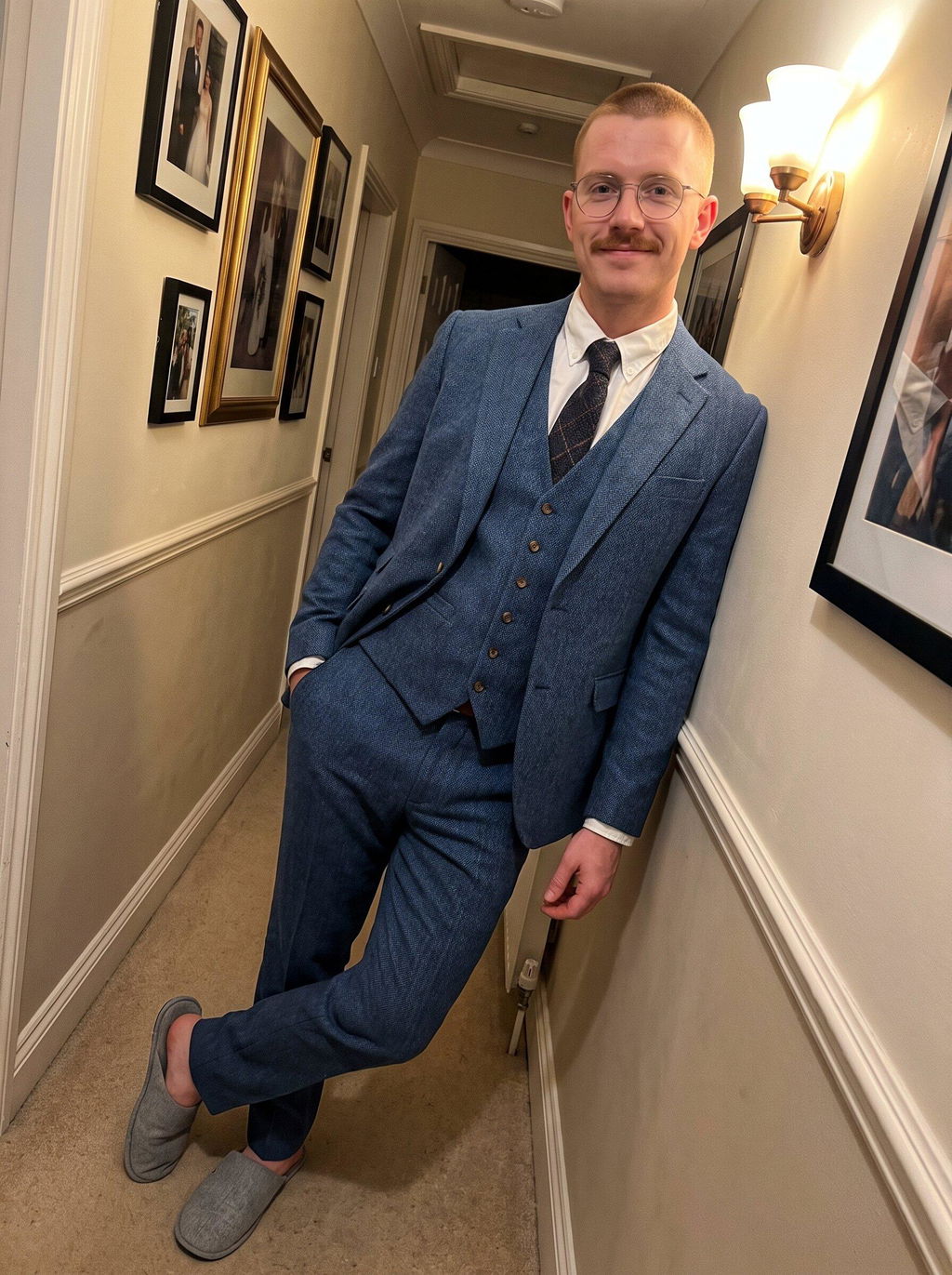
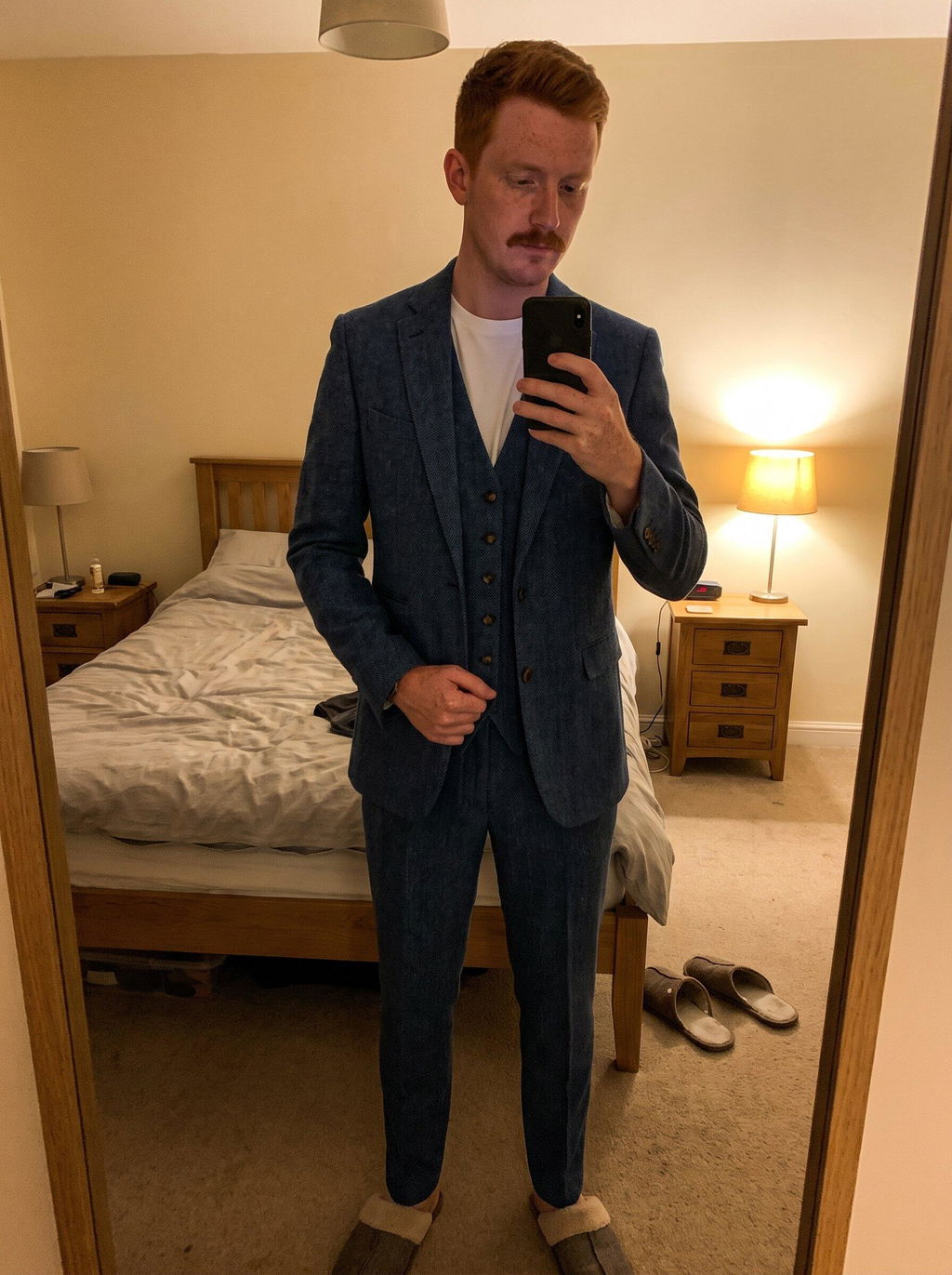
1. Never Wear a Belt with a Three-Piece Suit Waistcoat
A tailored waistcoat is designed to finish cleanly over the waistband of your trousers without any gap showing your shirt. Wearing a belt under a vest produces an awkward, unsightly buckle protrusion right at your midsection, forcing the vest points outward and ruining your clean silhouette. When wearing a 3-piece suit, rely on button-in suspenders (braces) or side adjusters.
2. Trousers with Side Adjusters (Side Tabs)
Bespoke and high-end formal trousers feature metal side adjusters rather than belt loops. This uninterrupted waistband elongates your leg line and keeps the waist looking clean and modern. Remember: if your trousers have belt loops, you should wear a belt; if they do not have loops, never force one.
3. Tuxedos & Evening Dress Wear
A true tuxedo trouser is crafted with a satin side braid and no belt loops. A belt is completely forbidden in black-tie etiquette. Instead, waist support is maintained through silk moiré suspenders worn under your satin cummerbund or horseshoe evening waistcoat.
 The flawless drape: Waistcoats sit perfectly flush against the waistline when belts are replaced with side adjusters
Master Effortless Formal Elegance with MensEventWear
Whether you are styling a classic two-piece with burnished calfskin brogues or stepping into the immaculate symmetry of a three-piece herringbone suit, the difference between ordinary and extraordinary tailoring is precision fit.
Frequently Asked Questions (FAQ)
1. Do brown shoes and belts need to be the exact same shade?
No, they do not need to be an identical match. As long as they belong to the same tonal family and warmth level (for example, pairing a mid-brown belt with dark brown brogues, or cognac with warm caramel), your outfit will look cohesive and natural. Exact identical matches can sometimes appear overly manufactured.
2. What belt width is appropriate for a tailored suit?
Dress belts for suits should measure 1.25 inches (3.0 cm) to 1.35 inches (3.5 cm) in width. Anything wider (1.5 inches and above) is a casual belt intended for jeans and chinos, which looks disproportionate and bulky through tailored trouser loops.
3. Can I wear a brown belt with black shoes (or vice versa)?
In formal and tailored suiting, mixing black and brown leathers is a universal faux pas. Because black and brown are opposing anchor tones, mixing them creates an unsettled, uncoordinated look. Always pair black shoes with a black belt, and brown shoes with a brown belt.
4. What if my watch metal is silver, but my belt buckle is gold?
In strict black-tie and executive dress codes, all metals should match (e.g., silver belt buckle with a steel watch and silver cufflinks). In modern business-casual and celebratory wedding attire, subtle metal mixing is acceptable if done deliberately, but maintaining metal alignment remains the pinnacle of sharp dressing.
5. Should I wear a belt if I take off my jacket during a reception?
If you are wearing a 2-piece suit with belt loops, yes—keep your dress belt on, as empty belt loops look unfinished. However, if you are wearing a 3-piece suit with a waistcoat, you should not be wearing a belt at all; the waistcoat keeps your waist covered and looking exceptionally structured throughout the evening.